

Retail
Human ressources and workforce
09 April 2026

Developing a Learning Culture so Expertise Doesn't Walk Out the Door

By

Marie-Hélène Couette | podium

Marie-Hélène Couette | podium

Marie-Hélène Couette is the Founder of podium, an organizational performance consulting firm that offers customized support services and facilitates workshops for businesses. With over 10 years of experience in SME growth and management, her mission is to help organizations develop the full potential of their teams so that every employee feels like a champion.

She is also the author of the book EFFICACE – Cultiver l’expertise interne en développant des champions, a practical guide to involving every collaborator in knowledge management and fostering the sustainability of SMEs.
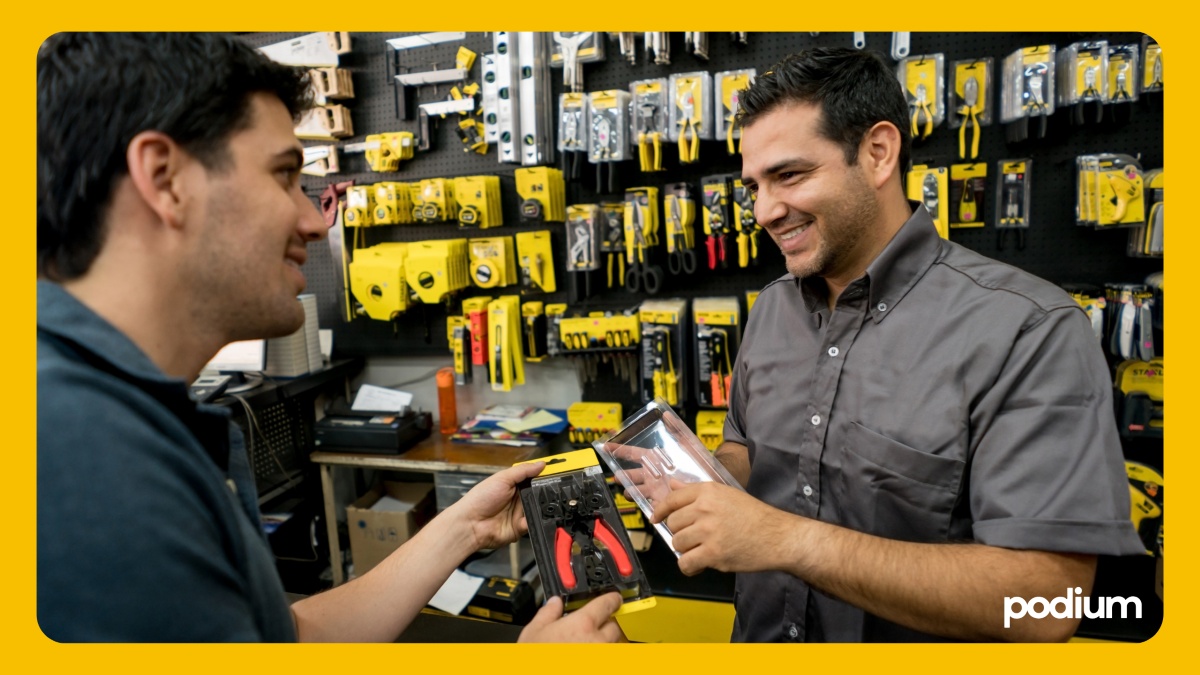

Developing a Learning Culture so Expertise Doesn’t Walk Out the Door

Expertise is often an invisible resource, spread across the four corners of the province. For retail managers, this expertise is both the organization’s greatest asset and its greatest vulnerability.

Imagine that in Sherbrooke, there is Sophia, an exceptional manager who maintains the lowest staff turnover rate in your organization thanks to an onboarding method that only she knows the secret to. Then in Gaspé, you can count on Bertrand, a consultant whose sales are systematically 30% higher than the average.

These people are the pillars of your performance. But ask yourself: what happens if one of them leaves their branch tomorrow morning?

The risk is real: a loss of organizational memory that forces the store to start from scratch. Moreover, how is it that Sophia and Bertrand’s methods only benefit their own team? 

Imagine the impact on your profitability if every consultant in Gatineau sold like Bertrand!


The Danger of Isolated Expertise on Organizational Adaptability

Operating well today is a necessary condition, but it is a precarious strategy if, tomorrow, you lose access to the knowledge that makes these operations possible. In retail, know-how is often organic, meaning it resides in the hands and heads of the people on the floor, and not in IT systems.

Failing to invest in a learning culture exposes your network to three major risks:

1. Decreased Performance Upon Departures

When an experienced employee leaves, it’s not just a position that becomes vacant, it’s a piece of your efficiency that vanishes. Without a transfer mechanism, you pay the price of repeated learning. Every new employee has to rediscover the tricks their predecessor took years to perfect.

2. Network Stagnation

If knowledge does not circulate among your stores, your growth is limited by the speed at which each branch can learn individually. A network that does not share its best practices condemns its least performing points of sale to remain mediocre, even though the solution already exists a few hundred kilometers away.

3. Inability to Adapt to Market Changes

Adaptive intelligence is your ability to adjust to new technologies or changes in consumer behavior. It requires information to circulate rapidly between head office and the branches, in all directions. Without a learning culture, innovations successfully tested in the field are not propagated to the rest of the organization, which stagnates in the status quo.

The Learning Culture, a Driver of Sustainability

In retail, a company’s sustainability is measured not only by the solidity of its infrastructure or the quality of its products, but by its capacity to never stop learning. An organization that stagnates in its achievements is a vulnerable organization. Conversely, building a learning culture means transforming every operational challenge into an opportunity for collective evolution.

This is where individual knowledge becomes a strategic asset for the entire network. Documenting a procedure is an essential first step to stabilizing your standards, but it is the learning culture that brings these standards to life by allowing teams to develop them.

By creating an ecosystem where sharing is valued, you ensure that even if faces change, your organization’s intelligence only grows.


Why is a Learning Culture a Strategic HR Issue?

For human resources professionals, a learning culture is a powerful management lever that directly addresses current workforce challenges.

Here are three reasons why it must become a priority:

1. A Lever for Retention and Engagement

An employee who feels their expertise is recognized and that they are actively contributing to the company’s evolution is an engaged employee. Valuing sharing means giving a deeper meaning to the work of your best talents.

2. Reduced Pressure on Local Managers

Too often, branch managers bear the burden of continuous training and problem-solving alone. By establishing a learning culture, you allow peer-to-peer mutual assistance to take over.

3. The Creation of Collective Resilience

An organization that focuses on knowledge sharing is much less dependent on a few isolated individuals. By circulating expertise throughout the network, you build an agile structure, capable of maintaining its quality standards regardless of staff movements.

Transforming Your Knowledge into a Competitive Advantage

The true competitive advantage of a Quebec retailer today no longer lies solely in its products or prices, but in its ability to learn faster than the competition. The question is: do you know the mechanisms for developing a learning culture?

Conference

HR Day 2026 – Innovative Strategies for Retail

On April 23rd, during the HR Day 2026, I invite you to my conference to explore concrete strategies.

We will establish the foundations of a learning culture in a network of stores, the role of HR, and different initiatives to cultivate the sharing of best practices among your branches. We will even discuss the key role of employees (your champions) in protecting internal expertise.

Don’t let knowledge evaporate anymore. Come discover how to fix it durably at the heart of your operations!

Events

How to nurture the sharing of best practices between your branches

Turn isolated wins into collective performance. Learn how to break down silos between your stores and build a resilient learning culture. Stop the knowledge drain!